Anglų kalba. 2 kl.
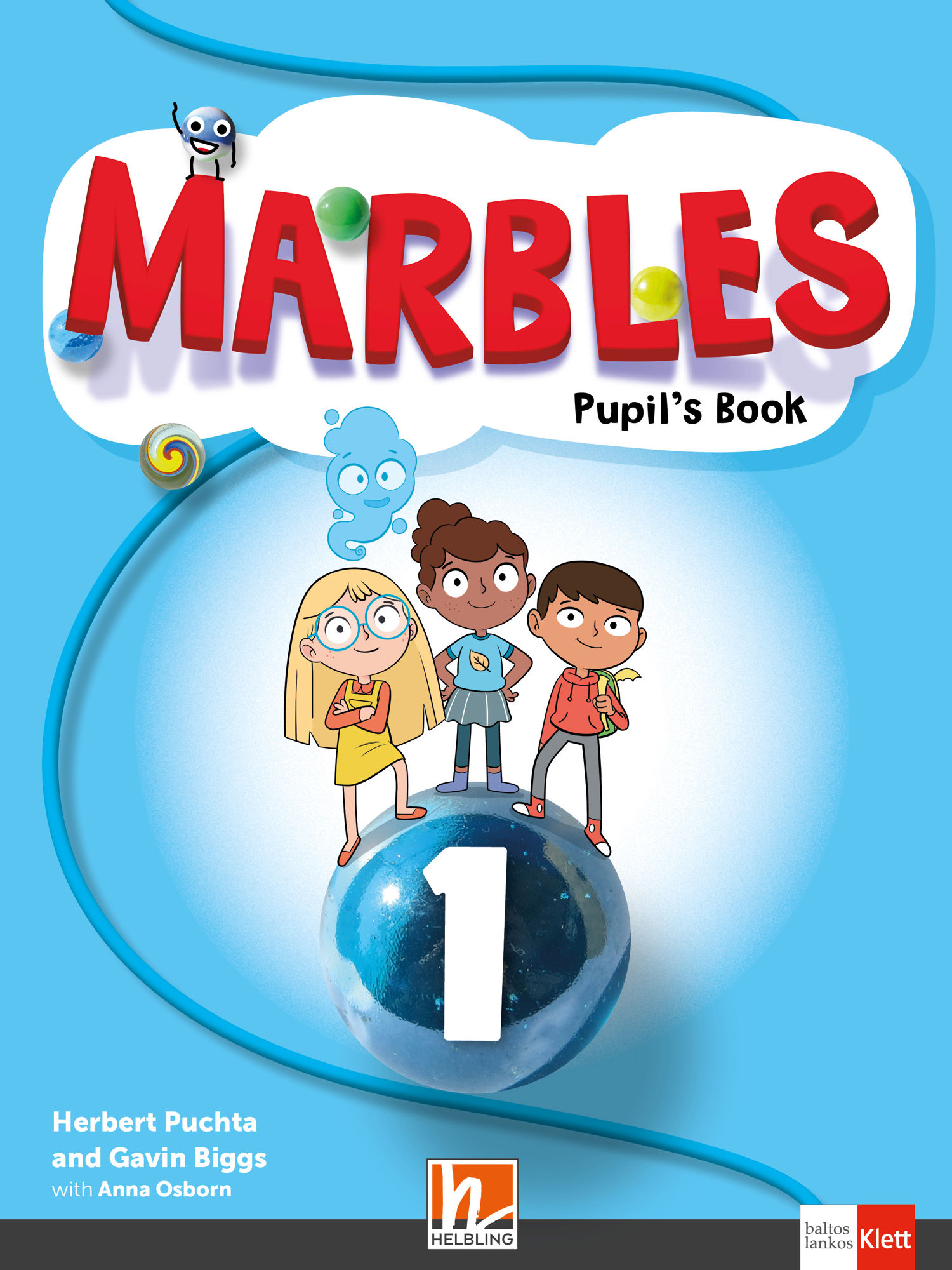
Authors
Herbert Puchta and Gavin Biggs with Anna OsbornPublisher
Ką rasite vadovėlyje?
Ugdymą per kalbėjimą ir žaidimą, skatinantį natūralų kalbos vartojimą nuo pirmųjų pamokų. Vaizdo pasakojimą, kuriame mokinius per ugdomąjį turinį veda nuotaikingas veikėjas vardu Whatsit. Spalvingus žodynėlius su lietuvišku vertimu, padedančius lengviau įsisavinti naują leksiką. Užduočių aprašymus ir anglų, ir lietuvių kalbomis, palengvinančius mokytojo darbą ir pamokų planavimą. Projektinę veiklą, skatinančią bendradarbiavimą, kūrybiškumą ir aktyvų mokinių įsitraukimą. Dėmesį CLIL, vertybiniam ugdymui ir pasaulietiškam kontekstui (įvairios kultūros, aplinkosauga). Gyvenimiškų įgūdžių ugdymą: vaizduotę, mąstymą, komunikaciją, socialinius ir emocinius gebėjimus. Daug dainelių, padedančių lavinti anglų kalbos tartį ir klausymo įgūdžius.
1. Welcome
Lead |
Chapter |
|---|---|
| 1.1. | Map of the book |
| 1.2. | Welcome |
| 1.3. | WHATSIT AND FRIENDS! The magic box |
| 1.4. | Letters |
| 1.5. | Colours |
| 1.6. | Numbers |
| 1.7. | Listening and Speaking |
| 1.8. | WHATSIT AND FRIENDS! What's a Whatsit? |
| 1.9. | Review |
2. Unit 1. Where’s my bike?
Lead |
Chapter |
|---|---|
| 2.1. |
Unit 1. Where’s my bike?
Free chapter! |
| 2.2. |
Vocabulary
Free chapter! |
| 2.3. |
Language 1
Free chapter! |
| 2.4. |
Emma’s phonics b
Free chapter! |
| 2.5. |
Language 2
Free chapter! |
| 2.6. |
OUR WORLD: Toys and shapes
Free chapter! |
| 2.7. |
Value
Free chapter! |
| 2.8. |
Listening and Speaking
Free chapter! |
| 2.9. |
Project
Free chapter! |
| 2.10. |
Reading
Free chapter! |
| 2.11. |
Imagine, create and play
Free chapter! |
| 2.12. |
Review
Free chapter! |
3. Unit 2. My school is cool!
Lead |
Chapter |
|---|---|
| 3.1. | Unit 2. My school is cool! |
| 3.2. | Vocabulary |
| 3.3. | Language 1 |
| 3.4. | Emma’s phonics p |
| 3.5. | Language 2 |
| 3.6. | CLIL: Art |
| 3.7. | WHATSIT AND FRIENDS! Show and tell |
| 3.8. | Value |
| 3.9. | Project |
| 3.10. | Reading |
| 3.11. | Imagine, create and play |
| 3.12. | Review |
4. Unit 3. That's my family
Lead |
Chapter |
|---|---|
| 4.1. | Unit 3. That’s my family |
| 4.2. | Vocabulary |
| 4.3. | Language 1 |
| 4.4. | Emma’s phonics m |
| 4.5. | Language 2 |
| 4.6. | OUR WORLD: Family holidays |
| 4.7. | Value |
| 4.8. | Listening and Speaking |
| 4.9. | Project |
| 4.10. | Reading |
| 4.11. | Imagine, create and play |
| 4.12. | Review |
5. Unit 4. They're my pets
Lead |
Chapter |
|---|---|
| 5.1. | Unit 4. They’re my pets |
| 5.2. | Vocabulary |
| 5.3. | Language 1 |
| 5.4. | Emma’s phonics d |
| 5.5. | Language 2 |
| 5.6. | CLIL: Natural science |
| 5.7. | WHATSIT AND FRIENDS! Cat in a tree |
| 5.8. | Value |
| 5.9. | Project |
| 5.10. | Reading |
| 5.11. | Imagine, create and play |
| 5.12. | Review |
6. Unit 5. You can do it!
Lead |
Chapter |
|---|---|
| 6.1. | Unit 5. You can do it! |
| 6.2. | Vocabulary |
| 6.3. | Language 1 |
| 6.4. | Emma’s phonics s |
| 6.5. | Language 2 |
| 6.6. | OUR WORLD: A cool pet |
| 6.7. | Value |
| 6.8. | Listening and Speaking |
| 6.9. | Project |
| 6.10. | Reading |
| 6.11. | Imagine, create and play |
| 6.12. | Review |
7. Unit 6. I’ve got a monster!
Lead |
Chapter |
|---|---|
| 7.1. | Unit 6. I’ve got a monster! |
| 7.2. | Vocabulary |
| 7.3. | Language 1 |
| 7.4. | Emma’s phonics f |
| 7.5. | Language 2 |
| 7.6. | CLIL: Natural science |
| 7.7. | WHATSIT AND FRIENDS! Puzzle trouble |
| 7.8. | Value |
| 7.9. | Project |
| 7.10. | Reading |
| 7.11. | Imagine, create and play |
| 7.12. | Review |
8. Unit 7. I like apples!
Lead |
Chapter |
|---|---|
| 8.1. | Unit 7. I like apples! |
| 8.2. | Vocabulary |
| 8.3. | Language 1 |
| 8.4. | Emma’s phonics e |
| 8.5. | Language 2 |
| 8.6. | OUR WORLD: Favourite foods |
| 8.7. | Value |
| 8.8. | Listening and Speaking |
| 8.9. | Project |
| 8.10. | Reading |
| 8.11. | Imagine, create and play |
| 8.12. | Review |
9. Unit 8. In the wild world
Lead |
Chapter |
|---|---|
| 9.1. | Unit 8. In the wild world |
| 9.2. | Vocabulary |
| 9.3. | Language 1 |
| 9.4. | Emma’s phonics j |
| 9.5. | Language 2 |
| 9.6. | CLIL: Art |
| 9.7. | WHATSIT AND FRIENDS! Beach adventure |
| 9.8. | Value |
| 9.9. | Project |
| 9.10. | Reading |
| 9.11. | Imagine, create and play |
| 9.12. | Review |
10. Look and find
Lead |
Chapter |
|---|---|
| 10.1. | Look and find |
11. Picture dictionary
Lead |
Chapter |
|---|---|
| 11.1. | Picture dictionary (Unit 1) |
| 11.2. | Picture dictionary (Unit 2) |
| 11.3. | Picture dictionary (Unit 3) |
| 11.4. | Picture dictionary (Unit 4) |
| 11.5. | Picture dictionary (Unit 5) |
| 11.6. | Picture dictionary (Unit 6) |
| 11.7. | Picture dictionary (Unit 7) |
| 11.8. | Picture dictionary (Unit 8) |
12. Language reference
Lead |
Chapter |
|---|---|
| 12.1. | Language reference (Unit 1) |
| 12.2. | Language reference (Unit 2) |
| 12.3. | Language reference (Unit 3) |
| 12.4. | Language reference (Unit 4) |
| 12.5. | Language reference (Unit 5) |
| 12.6. | Language reference (Unit 6) |
| 12.7. | Language reference (Unit 7) |
| 12.8. | Language reference (Unit 8) |
-
The study kit contains 122 chapters and 70 exercises of which 70 are in the chapters and 0 in the exercise stack.
-
Authors
Herbert Puchta and Gavin Biggs with Anna Osborn -
Subject
English -
Grade
Grade 2 -
Kit's language
English -
Publisher
Baltos lankos Klett -
Included in packages